


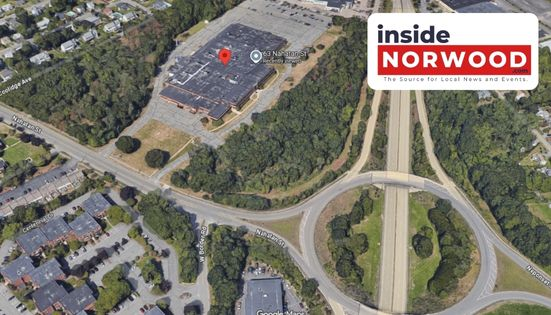
NORWOOD – A contentious debate unfolded during this week’s Planning Board meeting as local residents and board members raised sharp questions regarding 63-65 Nahatan Street.
Developers are requesting a series of waivers that would solidify a two-lot subdivision of the vacant property, often referred to as the “Telco” site. Crosspoint Associates, represented by Attorney David Hern Jr. of Gelerman Cabral, is pursuing the definitive plan approval primarily to “freeze the zoning” for eight years. This would essentially sidestep a recent town meeting vote that restricted multi-family or mixed-use residential projects in the Providence Highway zoning district.
Hern explained that the applicant is utilizing a state statute (Chapter 48, Section 6) that allows a property owner who files and receives approval for a preliminary and then a definitive subdivision plan to lock in the existing zoning for an eight-year period.
“This whole procedure is to keep in effect the zoning that was in effect prior to the town meeting vote last May,” Hern stated during the planning board meeting.
The preliminary plan was approved on April 28th, and the definitive plan was filed in September. This procedure, Hern emphasized, is about securing the zoning freeze and does not mandate immediate development or construction.
The main point of contention revolved around the request for nine waivers from the town’s subdivision regulations. The developer argued that since they are not proposing an actual development, just a paper subdivision creating two lots (Lot A at 3 acres and Lot B at 25.35 acres) and a short cul-de-sac – many detailed requirements are unnecessary and costly at this stage.
The requested waivers included:
- Tree Count: Waiving the requirement to count every tree eight inches or more in diameter on the 27-acre site, deemed a “waste of time, money, and effort” without a specific development plan.
- Soil and Percolation Tests: Waiving requirements for soil descriptions and perc tests, arguing the property is on town sewer and testing should wait until a specific building design is known.
- Storm Drainage and Utilities: Waiving detailed design computations and plans for a complete storm drain system, police call, and fire alarm system, again stating these should be addressed with a future site plan.
Board member Ernie Paciorkowski led the charge in questioning the applicant’s approach, summarizing the core concern: the plan feels like a shortcut designed solely to gain time.
“Other than that cul-de-sac, this plan is to me is just a form… it’s just buying time until you get a developer,” Pachowsky said.
Several local residents raised concerns during public comment including the lack of transparency by Crosspoint and their failure to share documents in a timely manner. Hern attempted to ease those concerns saying all the proposals are available online and those submitted at this meeting will be available in the morning. This offered nothing to one 74-year-old resident who would have preferred to have paper copies of these proposals at the door of the public meeting.
Another resident questioned the motivations of the developer, asking what they are willing to give in return for such a generous zoning gift. This neighbor recommended Crosspoint assist the town with schools or public safety as a result of the increase in the burden of local services. Another neighbor was dissatisfied by the tax revenue argument where the town approves any project simply due to the increased income to the town. She asks the planning board to weigh whether that revenue offsets the increased drain on Norwood’s services. It was recommended by another resident for the planning board to delay their vote until the local community had sufficient time to review the proposal and make informed opinions.
The sheer volume of waivers (nine “one-offs”) proposed by the developers was a major sticking point, despite the individual waivers seeming reasonable in isolation. A central legal question was then raised: If the waivers are granted now, will they be grandfathered in when the developer returns with a “full-blown proposal” (e.g., a Market Basket or Trader Joe’s)?
Hern clarified that the current definitive subdivision plan is an entirely separate legal process from future development approvals. The subdivision plan they are proposing is only for freezing the zoning and any future development proposal (for stores, restaurants, etc.) would trigger the full set of zoning bylaw requirements, including site plan approval, special permits, and the need to show detailed drainage, roads, and utilities built to town standards.
The debate over the property’s future remains highly charged. Neighbors want the developer to be responsible with the property and maintain Norwood’s unique environment and avoid the push back they had with the Saugus Avalon Bay project several years ago. This project created 280 apartments and 24,000 square feet of retail space on the complex. Drainage, security, privacy and the increase in traffic were major concerns from abutters.
It’s possible this is not Crosspoint’s ultimate development goal, but Norwood needs to stay informed and vigilant to avoid becoming another Saugus.
