


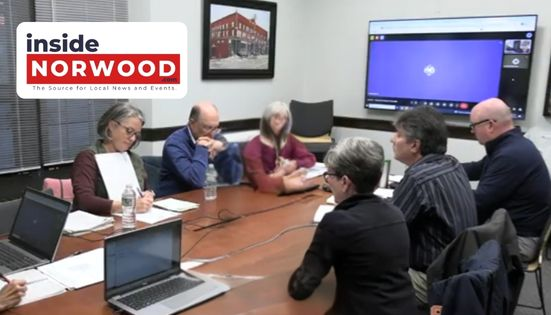
NORWOOD – During Fincom’s most recent meeting, town meeting moderator Gerri Slater asked the finance committee to allow a Consent Agenda process during November 13’s upcoming Town Meeting. This process will bundle the first three articles into a single vote, allowing officials to quickly dispense with them and focus on “large dollar amount articles.” Slater cited efficiency in order to address what she referred to as “administrative type articles.”
“The reason we’re doing it is it’s just another way to create some efficiency with town meeting,” Slater said. “Kind of like electronic voting to have it move along a little quicker. So we can spend… the majority of their time talking about in this case large dollar amount articles and kind of move some of the more administrative type articles quickly along.”
The consent agenda process, which was recommended by the 2019 Town Meeting Rules Committee and subsequently approved in town bylaws, allows for a block of non-controversial, routine articles to be voted on collectively with a single motion.
Although a rather routine procedure, some may argue the streamlined process risks silencing debate on key issues and erodes transparency and citizen scrutiny which is the foundation of local democracy. Elected town meeting members should be afforded the opportunity to challenge which articles are “administrative,” especially when it comes to spending taxpayer money.
The articles subject of the consent agenda includes funding for a workman’s compensation shortfall, transferring excess health insurance funds into the OPEC account, and covering a $3,800 deficit on an old MWRA loan. Slater argues these articles are “administrative” and “formality” items.
When asked for clarification on the MWRA loan deficit, Slater confirmed the action is required by the Department of Revenue (DOR) to clean up an account where expenses were over-booked in a prior year.
“DOR said the only way you can do it is go to town meeting, appropriate the retained earnings, and clean it up,” the Fincom was told, essentially making the Town Meeting approval a formality.
But defining what qualifies as administrative and “non-controversial” is where some may have concerns. The temptation to use the consent agenda to bypass debate on an article for a quick, easy approval may be troublesome.
Town Meeting is the purest form of direct democracy and requires residents who were elected by their neighbors to individually debate and vote on each article. Although time consuming, a member who wants to question the necessity, details or funding source has that ability. However, by lumping three articles together into one vote, the town essentially forces a member who disagrees with one of them to vote ‘no’ on the entire bundle, or simply stay silent.
This collective voting method, which Fincom appeared to endorse, risks turning complex financial decisions into rubber-stamped approvals, discouraging the thoughtful deliberation that separates Town Meeting from other forms of government. Critics argue, if left unchecked and used haphazardly, consent agenda may pre-empt the collective wisdom of Town Meeting, the very body with the ultimate authority to appropriate funds.
While the desire to save time is understandable, town meeting members must be vigilant. The success of the consent agenda will be measured not just by how quickly the Town Meeting adjourns, but by whether it inadvertently creates a culture of approving public spending by acquiescence rather than by informed consent. -RD