


NORWOOD – As the Massachusetts House of Representatives hammered out the fiscal year 2027 state budget this week, a familiar point of contention for Norwood taxpayers took center stage. In a high-profile floor debate, Representative Marc Lombardo of Billerica introduced Amendment #1588 to the budget bill (H.5500), a direct effort to roll back the state’s sales and use tax from 6.25% to 5%.
While the amendment promised immediate relief for families struggling with inflationary costs, the measure failed on a largely party-line vote of 25-118.
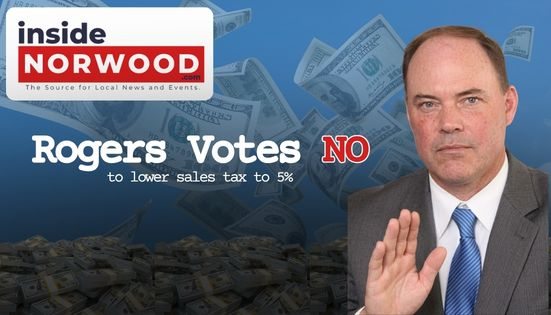
Among those voting “No” was Norwood’s own Representative John Rogers (D-Norwood). In a statement to Inside Norwood, his aide explained that Rogers “views the sales tax as regressive” (when asked whether Rogers would support lowering the sales tax back down to 5%). “[Rogers] is concerned that this proposal [Senate Bill 2086] would reduce state revenues without a sustainable plan to protect essential services or ensure long-term fiscal stability.” Senate Bill 2086 was a proposal formally titled An Act relative to sales tax reduction to 5% that is currently under review by the Joint Committee on Revenue but expected to fail later this year.
Lombardo’s amendment #1588 appeared straightforward in its legislative language, seeking to amend Chapters 64H and 64I of the General Laws. The goal was simple: strike the “6.25 per cent” figure that has been the standard since 2009 and replace it with the historic “5 per cent” rate.
For proponents, the amendment was about competitiveness and consumer power. “Lowering the sales tax provides immediate, broad-based relief to working families, seniors, and small businesses,” Lombardo argued on the House floor. He noted the current rate often drives residents in border towns to shop in tax-free New Hampshire.
Democratic leadership argued that a sudden drop to 5% would create a multi-billion dollar hole in the state budget. With the state already balancing new spending on the MBTA and emergency shelter systems, some maintain that cutting a primary revenue stream would be “irresponsible.” Representative Rogers, a veteran of the House and a consistent voice on municipal finance, joined the Democratic majority in rejecting the cut.
The defeat of Amendment #1588 is likely not the final word on the matter. The vote may have served as a legislative preview for a potential 2026 ballot initiative that would put the sales tax question directly to the voters this November. If this happens, the people of Massachusetts may soon have the chance to decide for themselves whether the 1.25% savings is worth the potential trade-off in state services.
By voting no on this amendment, opponents of this amendment have apparently made their position clear to Norwood voters: the 6.25% tax rate will remain for the sake of the Commonwealth’s bottom line. -RD
