


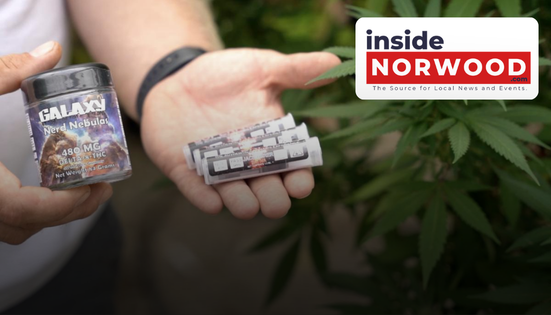
NORWOOD – The board of health provided the public an opportunity to voice their thoughts yesterday, on new regulations geared to making over-the-counter synthetic drugs more difficult to obtain. The proposed regulations would prohibit the manufacturing, sale and distribution of synthetically derived cannabinoids and kratom in Norwood.
If passed and adopted, the consequences include monetary fines and a closure of violating stores for seven days.
During the meeting on May 19, 2026, residents responded positively to the board’s proactive approach to health and safety. Steve Konetchy, who could not be present, submitted a letter to the board suggesting the penalties were not enough. “It would be to strengthen the enforcement provisions by doubling the fines and penalties described in the proposed regulation” Konetchy wrote. “Stronger penalties would send a clear message regarding the seriousness of these violations and would provide a greater deterrent against the sale and distributions of these substances.”
But what are synthetically derived cannabinoids? Apparently they’re chemical compounds that are created in a laboratory to mimic the effects of naturally occurring cannabinoids found in cannabis plants, such as THC or CBD (a.k.a. marijuana). Many of these compounds are made by converting hemp-derived CBD into other intoxicating cannabinoids through chemical processes.
Unlike cannabinoids that are directly extracted from a naturally grown plant, these substances are produced through chemical synthesis or by chemically altering hemp-derived compounds. The most common products are called Delta-8 THC; Delta-10 THC; THC-O acetate; HHC (hexahydrocannabinol).
Kratom on the other hand, is a tropical tree native to Southeast Asia, scientifically known as Mitragyna speciosa. Its leaves contain compounds that can affect the brain and body where small doses act like a stimulant, increasing alertness or energy. Higher doses, however may produce sedative or pain-relieving effects somewhat similar to opioids.
The 2018 Farm Bill legalized hemp containing less than 0.3% Delta-9 THC. Thus manufacturers have used this legal loophole to create and sell intoxicating products over-the-counter that are technically hemp-derived but chemically altered.
Supporters of this new regulation argue these products can be sold with little oversight or testing and appeal to minors through flavored edibles and colorful packaging.
Public health officials and lawmakers are now beginning to focus on synthetically derived cannabinoids because many existing cannabis laws in Massachusetts were written before these newer compounds became widely available.
The purpose of the agenda item was just to hold a public hearing. The Board Chair Kathleen Bishop stated they would not engage in dialogue with participants, but rather, will accept their testimony. She committed that a board discussion and vote will take place at the next scheduled board of health meeting which will be in late June. -RD

